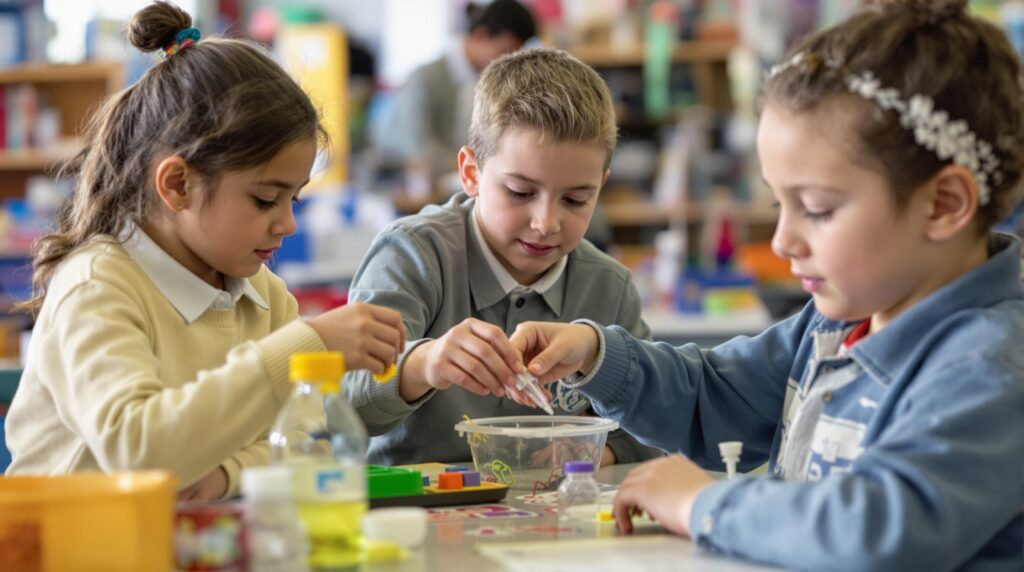

The Growing Rainbows science experiment combines artistic expression with scientific principles, making it a perfect march craft for kindergarten students. This simple yet captivating activity uses kitchen staples to create colorful rainbow patterns, helping young learners explore concepts of absorption, capillary action, and color mixing in a hands-on way.
Key Takeaways
- This activity teaches scientific concepts like absorption and capillary action through colorful play
- All materials are common household items, making this an accessible craft for any classroom
- The experiment works well as both a group activity or individual project
- Children practice observation skills while watching colors travel and mix
- This craft connects to March themes like rainbows and spring weather
What You’ll Need for Your Rainbow Growing Experiment
Before starting this engaging March craft with your kindergarteners, gather these simple materials:
🔬 Need quality science kits for your experiments?
→ See our tested science kit recommendations- Paper towels or coffee filters
- Washable markers in rainbow colors
- Small containers of water
- Scissors
- Optional: pipe cleaners or craft sticks
The beauty of this experiment is its simplicity. You likely already have these items in your classroom or home, making it perfect for a last-minute activity or planned lesson.
Step-by-Step Instructions
Follow these simple steps to create your growing rainbows:
- Cut paper towels or coffee filters into long strips about 2 inches wide.
- Draw a thick line of each rainbow color (red, orange, yellow, green, blue, purple) across the bottom of each strip, keeping the colors about 1 inch from the bottom edge.
- Fill small containers with about half an inch of water.
- Place the bottom edge of each strip into the water, making sure the colored part stays above the water line.
- Watch as the water slowly climbs up the paper, carrying the colors with it!
For a more structured craft, consider cutting the paper into cloud shapes first, then attaching the colored strips to the bottom to create hanging rainbows. This variation works wonderfully as a classroom decoration for March.
The Science Behind the Magic
While kindergarteners enjoy the colorful display, they’re actually witnessing scientific principles in action. This experiment demonstrates capillary action – the ability of liquid to flow upward against gravity in narrow spaces.
As water molecules travel up the paper fibers, they carry the marker pigments along, creating beautiful streaking patterns. When different colors meet, they blend to form new hues, providing a natural lesson in color mixing.
This process mirrors how plants draw water from their roots up to their leaves, making it an excellent supplement to other simple science experiments you might do in spring.
Learning Opportunities for Kindergarteners
This march craft for kindergarten offers several educational benefits:
- Fine motor skills development through drawing and handling materials
- Color recognition and understanding of primary and secondary colors
- Introduction to basic scientific concepts and vocabulary
- Practice with prediction and observation
- Connection to weather studies and seasonal changes
Enhance the learning by asking questions like “What do you think will happen to the colors?” or “Why do you think the water climbs up the paper?” These prompts encourage critical thinking and scientific reasoning.
Connecting to March Themes
March is the perfect time for rainbow crafts, with St. Patrick’s Day and the arrival of spring showers. This growing rainbow experiment fits naturally into seasonal curriculum about weather patterns, the water cycle, and spring phenomena.
After completing their rainbow crafts, children can discuss where and when they’ve seen real rainbows. This creates an opportunity to explain how sunlight and raindrops create the colorful arcs we see in the sky, connecting art to real-world observations.
Variations and Extensions
Once your kindergarteners master the basic rainbow experiment, try these variations:
- Use different types of paper to compare absorption rates
- Create rainbow “flowers” by folding circular coffee filters with color markers, then dipping the center in water
- Experiment with different color combinations to discover new blends
- Try salt on the wet paper to create interesting crystallization effects
For classrooms with digital capabilities, children can document the color transformation with time-lapse photography, creating a memorable record of their scientific observations.
Displaying and Preserving the Creations
After your rainbows have fully “grown,” let them dry completely. These colorful creations make beautiful decorations for your classroom windows, bulletin boards, or hallway displays.
Consider creating a class book about rainbows, incorporating the dried rainbow strips along with children’s observations and predictions. This documentation helps reinforce learning while creating a keepsake of their march craft experience.
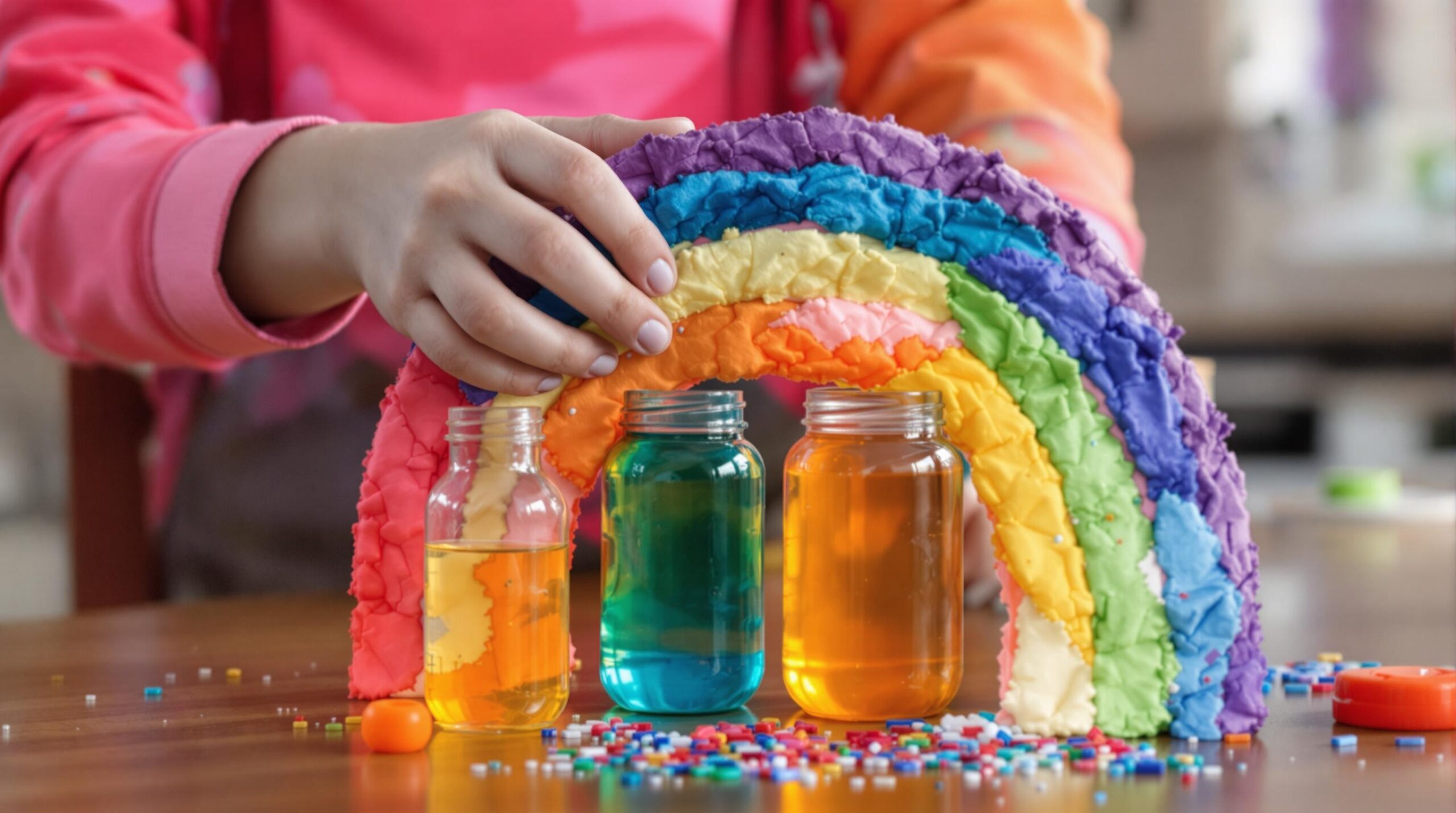
For a 3D display, attach the dried rainbow strips to craft sticks planted in playdough or clay. This creates a garden of standing rainbows that can brighten any classroom space throughout March and beyond.