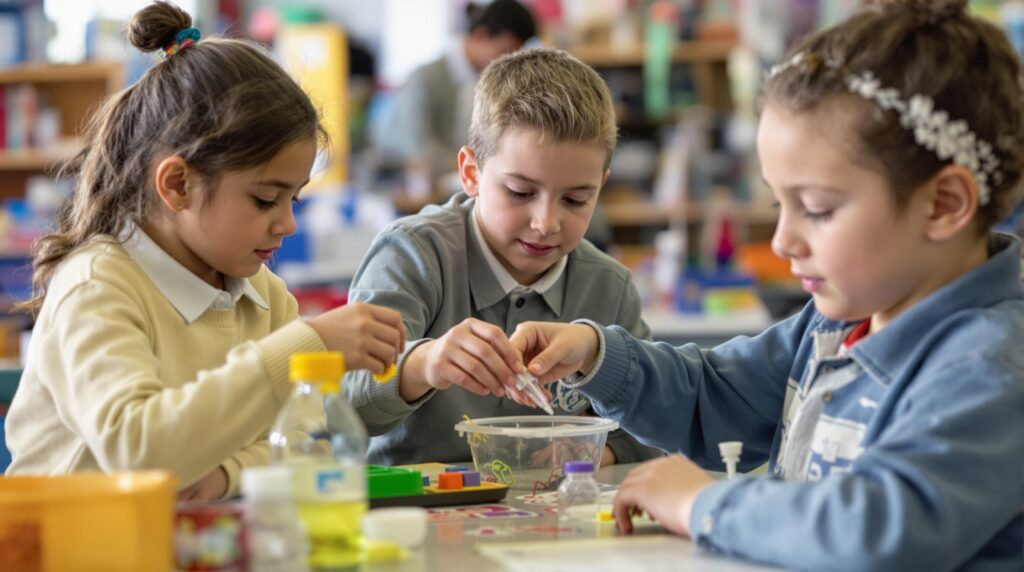

Space exploration ignites a sense of wonder in children, and using astronaut dolls can transform abstract cosmic concepts into tangible learning experiences. With simple household items and a bit of creativity, parents can create memorable space science activities that teach real STEM principles while entertaining curious young minds.
Key Takeaways
- Astronaut doll activities create hands-on learning opportunities that make complex space concepts accessible to children
- Simple household materials can be transformed into educational space tools without expensive equipment
- These activities foster critical thinking skills while building curiosity about science and space exploration
- Children develop fine motor skills and spatial awareness through interactive play with astronaut figures
- Parents can customize activities based on their child’s age and interests for personalized learning
https://www.youtube.com/spacegal
Why Astronaut Dolls Make Perfect Learning Tools
Astronaut dolls serve as powerful educational props that bridge the gap between abstract space concepts and concrete learning. Children naturally connect with toys and figures, making astronaut dolls ideal vehicles for introducing scientific principles. The physical manipulation of these dolls helps kids visualize and understand complicated ideas like gravity, orbit, and the challenges of space travel.
🔬 Need quality science kits for your experiments?
→ See our tested science kit recommendationsResearch shows that tactile learning engages multiple senses, creating stronger neural connections and improved retention of information. When children hold an astronaut doll, they’re not just playing—they’re building a personal connection to space exploration that can spark lifelong scientific curiosity. This approach transforms passive learning into active discovery.
Creating a Mini Space Station
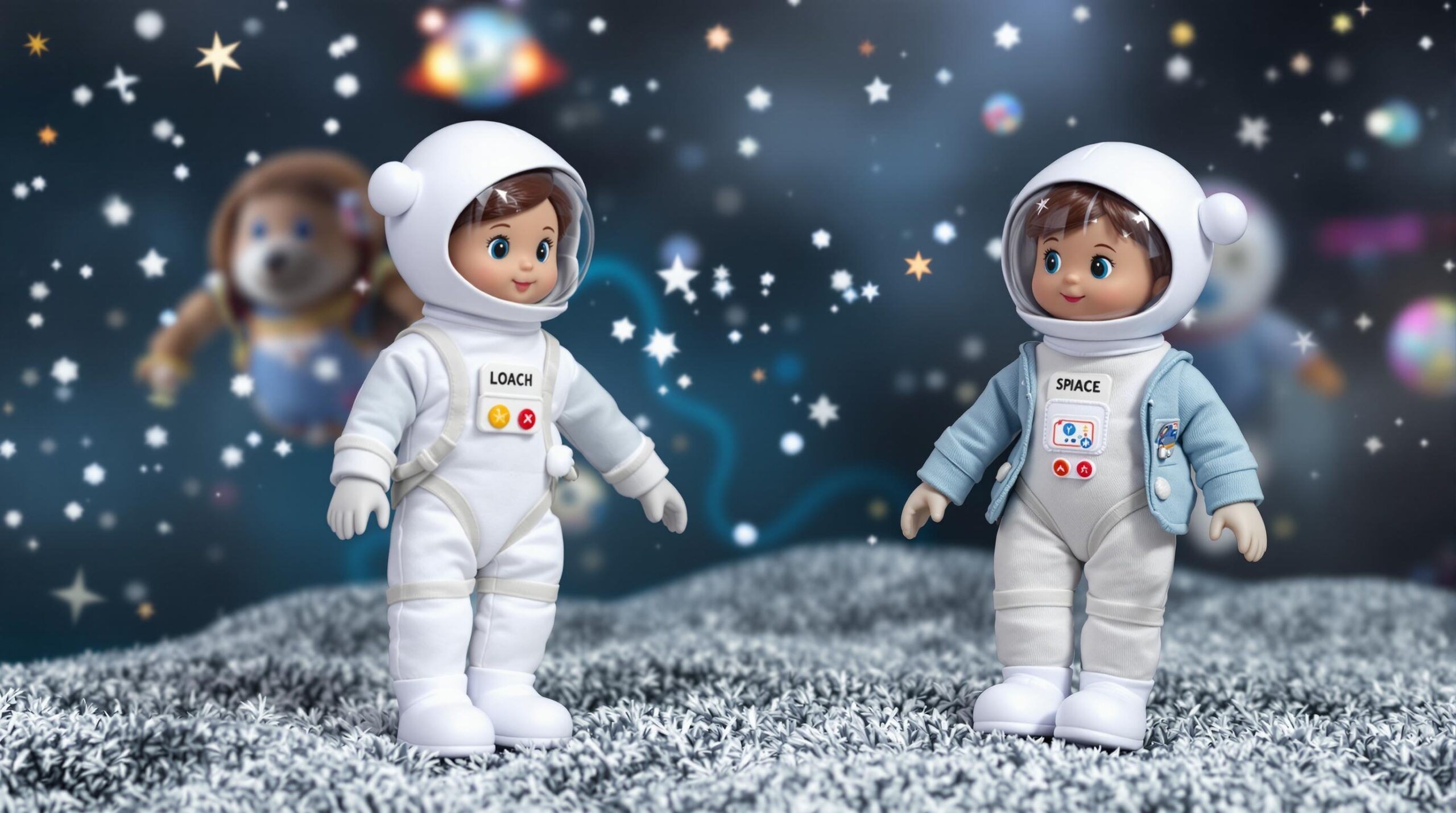
Turn a cardboard box into a miniature space station where your astronaut doll can live and work. This activity teaches children about the International Space Station and how astronauts adapt to living in space. Start by cutting windows and doors in the box, then add solar panels made from aluminum foil and communication antennas from pipe cleaners.
Help your child think about the specific needs astronauts have in space. What would they need to survive? How do they sleep, eat, and exercise? This prompts critical thinking about human requirements in extreme environments. To enhance the learning experience, add these features to your space station:
- A sleep station with Velcro or magnets to keep the astronaut doll from floating away
- Exercise equipment made from craft materials to show how astronauts stay healthy
- A research area with miniature science equipment
- Solar panels that demonstrate how space stations generate power
Simulating Zero Gravity Experiments
Create a simple zero gravity simulator using a clear plastic container filled with water. Your child can submerge their astronaut doll (waterproof ones work best) and observe how objects behave differently underwater, mimicking the weightless environment of space. This hands-on demonstration helps visualize the physics concept of buoyancy as an analog to microgravity.
Take the experiment further by adding small objects of different weights and densities to see how they behave when “weightless.” This activity opens discussions about how astronauts adapt to working in space and the challenges they face performing everyday tasks. Have your child try to predict which objects will float, sink, or hover in the middle—then test their hypotheses to develop their scientific thinking skills.
Building and Launching a Model Rocket
Construct a simple paper rocket that can carry your small astronaut doll for a short flight. This activity introduces basic principles of aerodynamics and propulsion. Use a paper tube (like a toilet paper roll), construction paper for fins, and a cone-shaped nose. The rocket can be launched using a bicycle pump and PVC pipe setup or a commercial stomp rocket launcher.
Before launch, discuss the forces at work: thrust pushing the rocket up, gravity pulling it down, and air resistance slowing its movement. Have your child decorate their rocket with mission patches or their own space program logo. For added learning, try these variations:
- Experiment with different fin shapes and sizes to see how they affect flight
- Add weight to different parts of the rocket to observe changes in trajectory
- Measure and record distances to introduce data collection and analysis
- Create a recovery system like a simple parachute from a plastic bag
Moon Surface Exploration
Create a realistic lunar landscape using a mixture of flour and cocoa powder in a shallow box or tray. This sensory activity lets children experience the texture and appearance of the moon’s surface while conducting experiments with their astronaut dolls. Add small rocks as moon boulders and use marbles to create impact craters.
Guide your child to make astronaut footprints in the “moon dust” and compare them to actual Apollo mission footprints. This opens discussions about why footprints stay preserved on the moon with no atmosphere or weather to erase them. Extend the learning by having your child design tools the astronaut might need for collecting samples or conducting experiments on the lunar surface.
Solar System Scale Model
Help your child create a to-scale solar system in your backyard or a local park using their astronaut doll as a reference point. This activity builds understanding of the vast distances and size differences in our solar system. Use everyday objects to represent planets—a peppercorn for Mercury, a cherry tomato for Earth, and a basketball for Jupiter.
The true value of this activity comes from the shocking realizations about space’s immensity. When planets are properly scaled and distanced, children gain perspective on cosmic relationships that textbooks can’t convey. Have your astronaut doll “visit” each planet and discuss what they might find there, from Mercury’s extreme temperatures to Jupiter’s powerful storms.
Space Food Experiments
Explore the challenges of eating in space by creating astronaut-friendly foods with your child. Freeze-dried fruits (available at most grocery stores) demonstrate food preservation techniques used for space missions. Make “astronaut pudding” by preparing instant pudding with less liquid so it’s thick enough not to float away in zero gravity.
Use this activity to discuss how astronauts eat in space and why special food preparation is necessary. Have your child feed their astronaut doll using specially designed utensils they’ve made from craft supplies. This provides insight into the practical problems astronauts must solve and encourages creative thinking about everyday challenges in unusual environments.
Mission Control Communications
Set up a home mission control center using cardboard boxes, paper plates as control panels, and old keyboards or calculators. This activity teaches children about the important role communication plays in space missions and introduces concepts of teamwork and problem-solving. Create simple missions for the astronaut doll to complete based on mission control’s instructions.
Encourage your child to write or draw mission logs detailing their astronaut’s activities and discoveries. For older children, introduce time delays in communication to simulate the reality of deep space missions. This activity builds language skills, creative thinking, and an understanding of the collaborative nature of space exploration.
Space Weather Station
Build a miniature weather station for your astronaut doll to monitor space conditions. Use simple materials like straws, paper cups, and cardboard to create instruments that demonstrate various types of measurements astronauts might take. A pinwheel can represent solar wind detectors, while a thermometer shows temperature variations.
This activity introduces meteorological concepts and the importance of monitoring space weather for astronaut safety. Have your child record daily “space weather” readings and predict how conditions might affect their astronaut’s activities. This builds pattern recognition skills and scientific observation habits while demonstrating how real astronauts depend on accurate environmental data.
Mars Habitat Design Challenge
Challenge your child to design and build a sustainable Mars habitat for their astronaut doll using recyclable materials from around the house. This forward-thinking activity encourages children to consider what humans would need to survive on another planet. They’ll need to include systems for growing food, generating power, and recycling water and air.
The habitat design activity connects directly to current NASA and SpaceX goals for Mars exploration. As your child works, discuss the real challenges of living on Mars—the thin atmosphere, extreme temperatures, and limited resources. For added engagement, try these extensions:
- Create a Martian landscape around the habitat with red soil and rocks
- Design specialized vehicles for exploring the Martian surface
- Develop a daily schedule for the astronaut including scientific research tasks
- Build in solutions for common problems like dust storms or radiation
Adapting Activities for Different Age Groups
These astronaut doll activities can be easily modified to suit children of various ages and developmental stages. For preschoolers, focus on sensory experiences like the moon surface exploration with simple vocabulary introduction. Elementary-aged children can handle more complex concepts like the solar system scale model with mathematical components.
Older children and pre-teens might enjoy adding programming elements using simple coding tools to create automated features for their space station or Mars habitat. The key is matching the complexity to your child’s current abilities while providing just enough challenge to maintain engagement and growth. Don’t hesitate to combine these activities with other simple science experiments to create a comprehensive learning experience.
Turning Play into Lasting Scientific Interest
The true value of these astronaut doll activities extends far beyond the immediate fun they provide. They plant seeds for future scientific thinking and career interests. Children who engage in space-themed play often develop stronger spatial reasoning skills and greater comfort with scientific concepts.
Document your child’s space adventures through photos or a special “mission logbook” to reinforce learning and create lasting memories. Consider connecting with local astronomy clubs or science centers that offer children’s programs to further nurture their budding interest in space. The journey that begins with an astronaut doll today might lead to a passion for science, engineering, or even a career with NASA tomorrow.