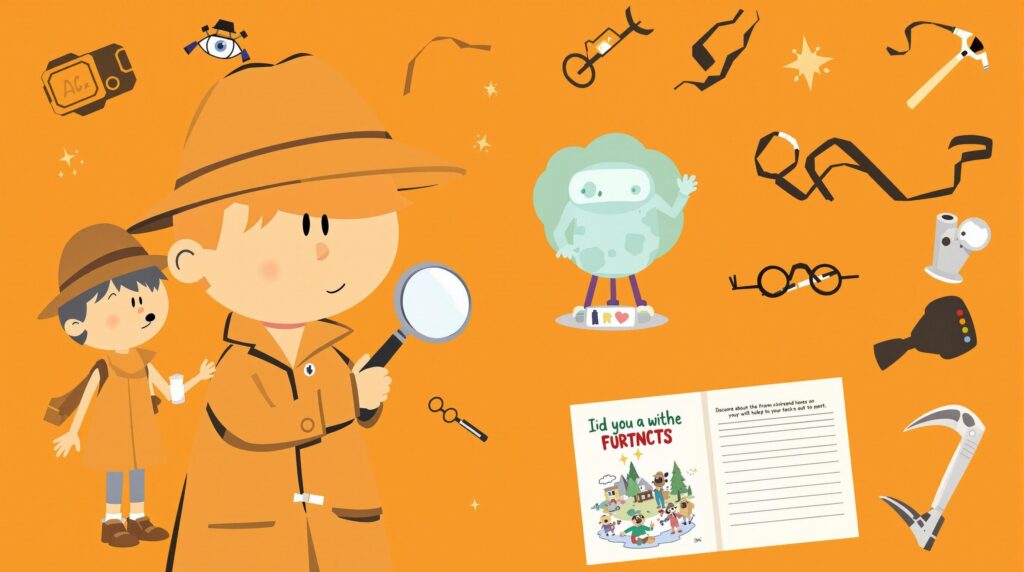
A detective evidence board transforms ordinary investigations into exciting learning adventures for kids. By creating their own DIY investigation boards, children can develop critical thinking skills while exploring scientific concepts through the lens of mystery-solving—making education feel like a thrilling detective story.
Key Takeaways
- Detective boards develop critical thinking skills by encouraging children to analyze clues and make connections
- Creating an evidence board introduces kids to real scientific methods like hypothesis testing and evidence evaluation
- DIY investigation activities can be customized for different ages and difficulty levels
- Mystery-solving promotes problem-solving abilities that transfer to academic and real-world situations
- Detective boards serve as interactive learning tools that make abstract concepts tangible and memorable
Why Detective Evidence Boards Make Learning Fun
Remember the excitement of watching your favorite detective show? That moment when all the clues come together on a sprawling evidence board with photos, notes, and red string connecting everything? That same thrill of discovery can be harnessed to transform how children learn and engage with scientific concepts.
🔬 Need quality science kits for your experiments?
→ See our tested science kit recommendationsDetective evidence boards tap into a child’s natural curiosity and desire to solve puzzles. By creating their own investigation station, kids aren’t just playing—they’re developing analytical thinking patterns that will serve them throughout their academic journey. Unlike passive learning activities, detective work requires active participation and decision-making.
This approach also breaks down the artificial barriers between subjects. A good mystery might incorporate elements of chemistry, physics, biology, history, and math—all wrapped in an engaging package that doesn’t feel like traditional homework. The result? Learning that sticks because it’s attached to emotion and discovery rather than rote memorization.
Setting Up Your Child’s First Detective Evidence Board
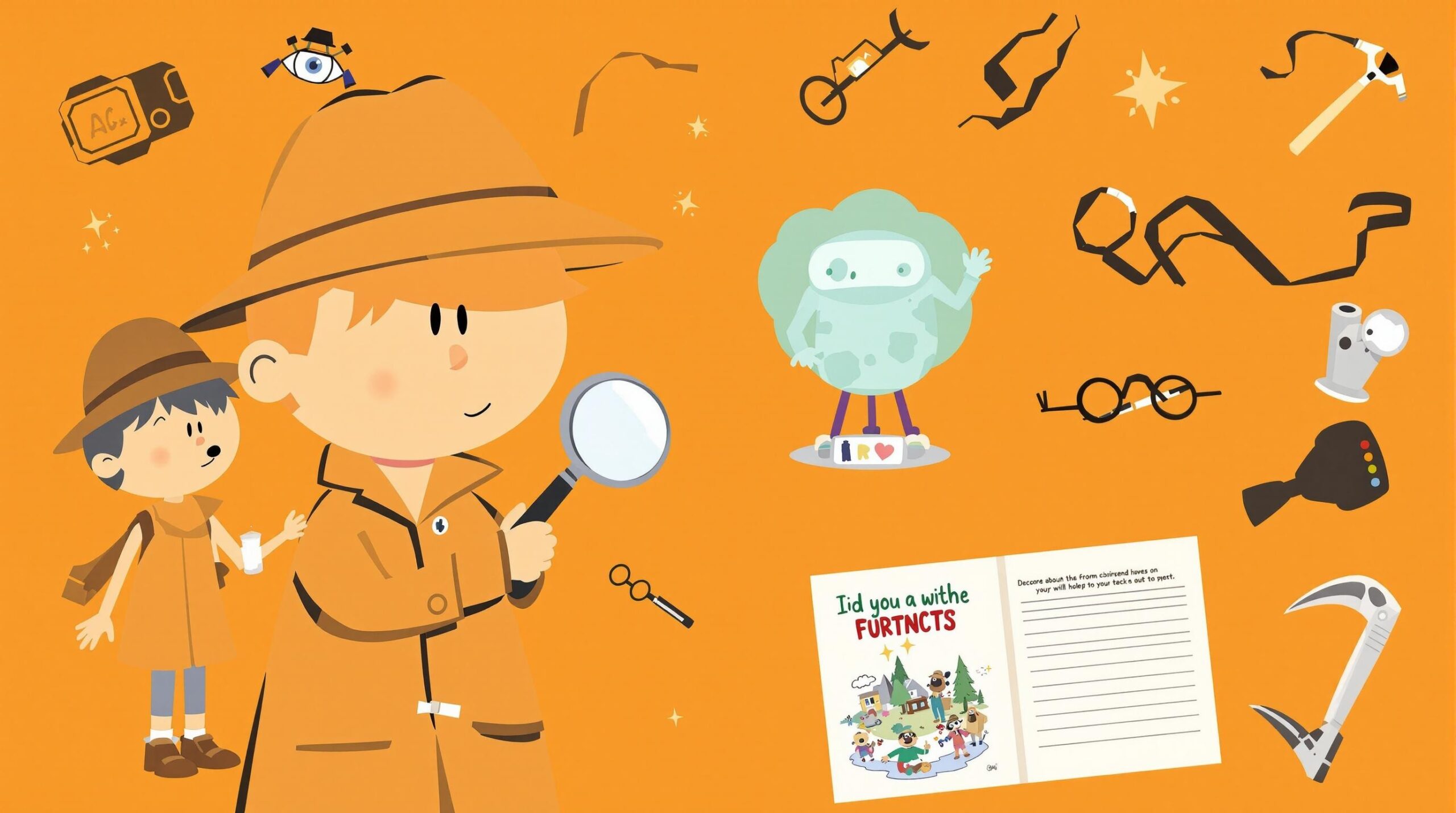
Creating a detective evidence board doesn’t require expensive materials. In fact, the simplicity of setup makes it accessible for families of all budgets. Here’s what you’ll need to get started:
- A corkboard, poster board, or even a dedicated wall space
- Push pins, tape, or sticky tack for attaching items
- Colored string or yarn (red is classic detective style!)
- Index cards for writing clues and theories
- Small plastic bags for “evidence” samples
- Magnifying glass for detailed examination
- Notebook for recording observations
The physical arrangement of the board is important. I recommend creating distinct sections for different types of information: witness statements, physical evidence, hypotheses, and conclusions. This organization teaches children how to categorize information—a vital skill for later scientific work.
For younger detectives (ages 5-7), keep the board at their eye level and use larger visual elements. Older kids (8-12) can handle more complex layouts and smaller details. Teenagers might enjoy incorporating digital elements, like QR codes that link to additional information or video “testimony.”
Mystery Scenarios That Teach Science Concepts
The beauty of a detective evidence board is its versatility. You can create mysteries that specifically target scientific principles you want your child to explore. Here are some starter scenarios:
- The Case of the Missing Cupcakes – Teach about fingerprints, food science, and observation skills
- Mystery of the Changing Colors – Explore chemical reactions and pH indicators
- The Disappearing Water Investigation – Introduce concepts of evaporation and the water cycle
- Backyard Wildlife Detective – Learn about local ecosystems and animal tracking
- The Archaeological Mystery – Discover principles of preservation and historical context
For each mystery, create a backstory that engages your child’s imagination. Then, plant evidence around your home or yard that connects to the story. The evidence trail should lead them to use scientific methods to solve the case.
You can also connect these activities to broader summer escape room science adventures for an extended learning experience that feels like pure entertainment.
Using Forensic Science to Enhance Detective Play
Real forensic techniques can be simplified for children while maintaining their scientific integrity. These hands-on experiments create unforgettable learning moments:
Fingerprint analysis is an excellent starting point. Mix a small amount of cocoa powder with a makeup brush to “dust” for prints on smooth surfaces. Children can collect their own fingerprints using clear tape and compare the patterns they find.
Chromatography becomes detective work when you use it to analyze “mystery inks.” Have your child use different black markers to create small dots on coffee filters, then dip the edge in water to watch the inks separate into component colors. This demonstrates that things aren’t always what they seem at first glance.
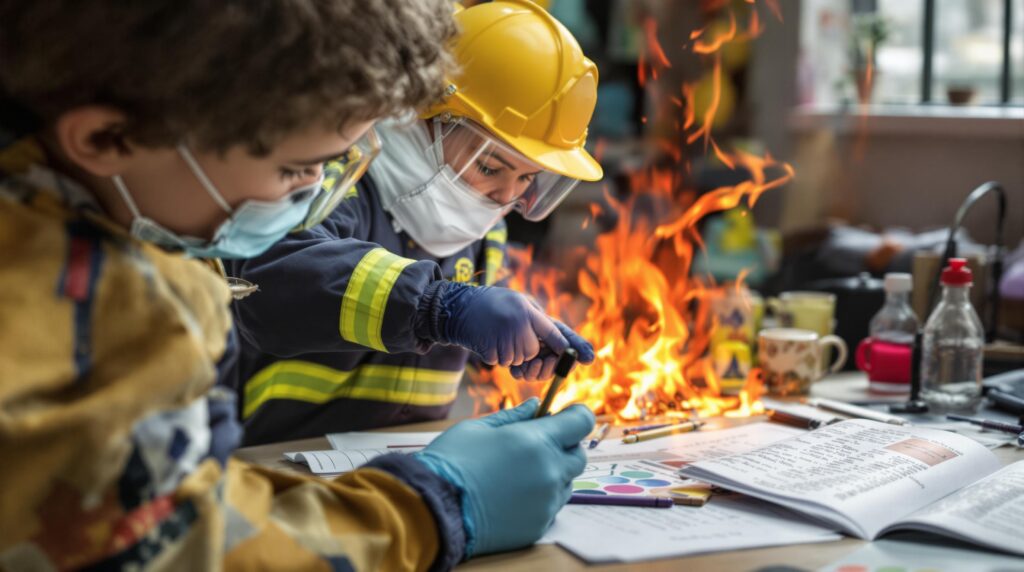
For older kids, introducing arson investigation concepts can teach chemistry principles through the lens of detective work. Simple tests like examining burn patterns or discussing how different materials react to heat provide valuable scientific insights.
Even basic soil analysis becomes exciting when framed as collecting evidence. Children can compare dirt samples from different locations, examining color, texture, and composition to determine where a “suspect” might have been.
Building Critical Thinking Skills Through Mystery-Solving
The detective evidence board does more than teach science—it develops higher-order thinking abilities that transfer to all areas of learning. As children work through mysteries, they naturally engage in the scientific method:
- Observation: Carefully examining evidence
- Hypothesis formation: Developing theories about what happened
- Testing: Finding ways to confirm or disprove their ideas
- Analysis: Drawing conclusions based on collected evidence
- Communication: Presenting their findings clearly
These skills form the foundation of critical thinking. When a child stands before their detective evidence board, connecting strings between clues and testing theories, they’re learning to evaluate information critically rather than accepting the first explanation that comes to mind.
I’ve observed that children who regularly engage in detective play become more comfortable with uncertainty. They learn that it’s okay not to know the answer immediately—that sometimes, you need to gather more information before reaching a conclusion. This patience and methodical approach to problem-solving serves them well in both academic and social situations.
Adapting Detective Boards for Different Ages and Interests
The beauty of detective evidence boards lies in their adaptability across developmental stages. For preschoolers and early elementary children, focus on simple sensory mysteries with obvious visual clues. A mystery about which animal left footprints in the “clay” (play dough) requires basic matching skills while introducing concepts of animal adaptation.
Middle elementary students (ages 8-10) can handle multi-step mysteries with red herrings and more complex scientific principles. This is a perfect age to introduce pH testing as a detective tool or simple coding activities disguised as deciphering secret messages.
For tweens and teens, incorporate real-world applications and current events. Environmental mysteries about local water quality or investigations into the physics of a sports controversy keep older kids engaged while teaching sophisticated concepts.
No matter the age, connecting the detective work to your child’s existing interests dramatically increases engagement. A space-loving child might enjoy solving mysteries about planetary exploration, while a history buff might prefer archaeological detective scenarios. The STEAM activity approach allows for this customization while ensuring learning objectives are met.
Making Learning Stick: Documentation and Reflection
The detective evidence board provides a visual record of your child’s investigative journey, but taking documentation a step further enhances the learning experience. Encourage your young detective to keep a case notebook where they record observations, questions, and conclusions.
Photography adds another dimension—have your child take pictures of their evidence board at different stages of the investigation. This creates a timeline of their thinking process and allows them to see how their understanding evolved.
After solving each mystery, hold a “detective debriefing” where you discuss:
- What evidence was most helpful in solving the case?
- Which scientific principles did they use?
- What would they do differently next time?
- How could they make the mystery more challenging?
This reflection process helps cement the learning that occurred during play. It also teaches children to value the process of investigation as much as the solution itself—a mindset that serves well in future scientific endeavors.
By creating a detective evidence board with your child, you’re not just providing entertainment—you’re building a foundation for scientific thinking and problem-solving that will benefit them for years to come. The excitement of connecting clues, testing theories, and solving mysteries transforms abstract concepts into concrete understanding, all while creating memories of learning that feel nothing like traditional education.