

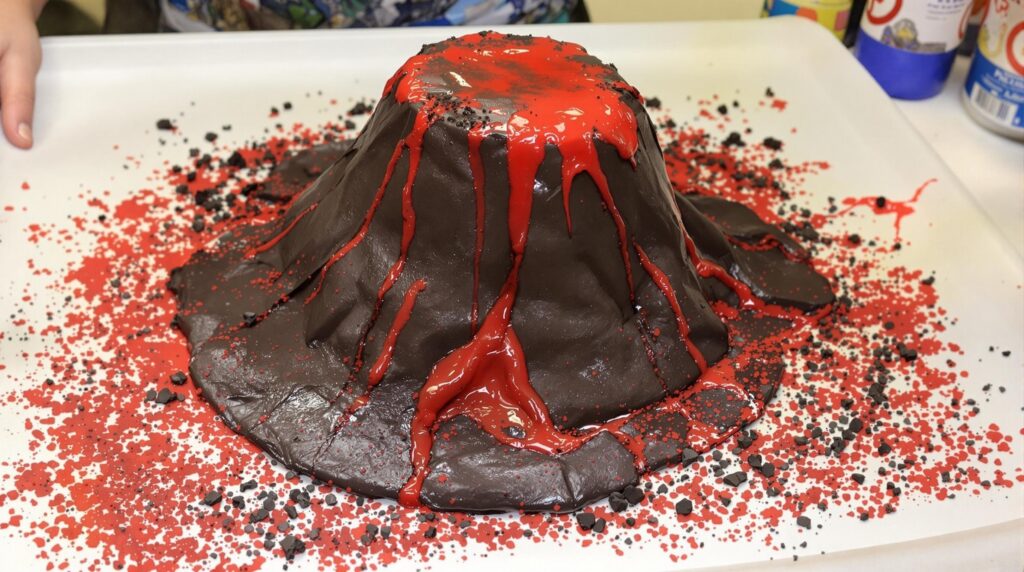
Paper mache volcanoes provide kindergartners with a tactile, engaging introduction to basic chemistry concepts while promoting creativity and hands-on learning. This classic science activity combines art with STEM education, allowing young children to observe chemical reactions firsthand when baking soda and vinegar create an exciting, bubbly “eruption.”
Key Takeaways
- The paper mache kindergarten volcano project seamlessly integrates art, science, and sensory play
- Children develop fine motor skills while creating their volcano structures
- The activity introduces basic chemistry concepts through observable acid-base reactions
- This project encourages collaborative learning and communication among young students
- Teachers can easily customize the complexity to match developmental stages
What You’ll Need for Your Paper Mache Volcano
Creating a paper mache volcano with kindergartners requires some basic materials that are easily accessible and affordable. Gathering these supplies beforehand ensures a smooth and enjoyable experience for both children and adults.
🔬 Need quality science kits for your experiments?
→ See our tested science kit recommendationsFor the volcano structure, you’ll need:
- Empty plastic bottle or cardboard tube
- Newspaper strips
- Flour and water mixture (paper mache paste)
- Cardboard base
- Paint (brown, red, orange)
- Paintbrushes
For the eruption ingredients, gather:
- Baking soda (2-3 tablespoons)
- Vinegar (½ cup)
- Red or orange food coloring
- Dish soap (optional, for extra foaminess)
- Small container for mixing

Step-by-Step Volcano Construction
Building the volcano structure is where creativity meets science in this engaging kindergarten activity. Follow these simple steps to help your young scientists create their masterpieces.
First, secure an empty plastic bottle or cardboard tube to a sturdy cardboard base using tape. This will form the central vent of your volcano where the “lava” will eventually flow from. Make sure it’s standing firmly upright before proceeding.
Next, prepare your paper mache paste by mixing equal parts flour and water until you achieve a consistency similar to pancake batter. Tear newspaper into strips approximately 1-inch wide and 6-inches long.
Show children how to dip each strip into the paste, gently wipe off excess with their fingers, and lay it over the bottle. Continue adding strips in overlapping patterns until you’ve created a cone shape around the bottle, leaving the top opening exposed.
Allow the structure to dry completely (usually 24-48 hours) before painting. This waiting period offers a great opportunity to discuss patience and observation skills with kindergartners.
Making It a Learning Experience
The paper mache kindergarten volcano project offers rich educational value beyond just the fun of watching it erupt. As children work on their volcanoes, engage them with age-appropriate science concepts.
Introduce basic volcano vocabulary like “eruption,” “lava,” and “crater” while they build. You can show simple pictures of real volcanoes to help them understand what they’re creating. This supports language development alongside scientific learning.
Encourage questions throughout the process. When children ask why the volcano will erupt, explain in simple terms that baking soda and vinegar create a special reaction that makes bubbles and foam. This plants seeds for future chemistry understanding.
The tactile nature of paper mache work helps develop fine motor skills crucial for writing and other kindergarten activities. Children practice hand-eye coordination as they carefully apply newspaper strips and later paint their creations.
Time for the Eruption!
The moment every kindergartner looks forward to is the exciting eruption! This demonstration of a chemical reaction will captivate young minds and create lasting memories.
When the volcano is completely dry and painted, gather children in a suitable area—preferably outdoors or on a surface protected with plastic sheeting or newspaper. This is the perfect opportunity to introduce amazingly fun experiments with vinegar and baking soda to spark their curiosity.
Pour approximately 2-3 tablespoons of baking soda into the volcano’s opening. Add a few drops of red or orange food coloring and a squirt of dish soap if desired. Then, when everyone is watching, pour in about ½ cup of vinegar and watch the “eruption” begin!
The bubbly reaction occurs because vinegar (an acid) and baking soda (a base) combine to form carbon dioxide gas. These bubbles push the colored mixture upward and out of the volcano, creating a fascinating lava-like effect.
Extending the Learning
After the excitement of the eruption, deepen the learning experience with follow-up activities that build on children’s newfound interest in volcanoes and chemical reactions.
Have children draw pictures of their volcanoes before and after the eruption. Ask them to describe what happened using their own words, and record their observations. This supports emerging scientific thinking and documentation skills.
Create a simple comparison chart showing other things that bubble or fizz in daily life. Examples might include:
- Carbonated drinks
- Bath bombs
- Alka-Seltzer tablets
- Bubbles in cooking pancakes
For a literacy connection, read age-appropriate books about volcanoes during circle time. This helps children connect their hands-on experience with broader knowledge about the natural world.
Tips for Teachers and Parents
Managing a paper mache kindergarten project requires some planning and patience, but the learning benefits make it worthwhile. Here are some practical tips to ensure success.
Consider breaking the activity into multiple sessions over several days. Day one might focus on building the base structure, day two on painting, and day three on the eruption. This approach maintains engagement levels and accommodates short attention spans.
For younger children or those who might find paper mache challenging, pre-form the basic volcano shape using aluminum foil around the bottle, then add just one layer of paper mache for decoration.
Take photos throughout the process to create a visual sequence of the project. These images can help children recall and discuss their learning later, reinforcing scientific vocabulary and concepts.
Remember that messiness is part of the learning process! Wear old clothes, use smocks, and embrace the creative chaos. The sensory experience of working with paper mache paste is valuable for kindergartners’ development.
Safety Considerations
While this activity is generally safe for kindergarten children, a few precautionary measures ensure everyone has a positive experience.
Always supervise children closely during the eruption phase. Though the vinegar and baking soda reaction is non-toxic, remind children not to touch their eyes after handling these materials and to wash hands afterward.
Check for flour allergies before beginning the paper mache portion. If necessary, alternative paste recipes using glue and water can be substituted for children with wheat sensitivities.
Position the volcano on a stable surface during the eruption to prevent tipping. The excitement level often rises dramatically when the bubbling begins, so establish clear boundaries for observation.
Keep extra paper towels or cloths handy for quick cleanups. The eruption can sometimes be more vigorous than expected, especially if children add extra vinegar in their enthusiasm!
Why This Activity Works So Well for Kindergartners
The paper mache volcano project aligns perfectly with how kindergartners learn best—through hands-on, multi-sensory experiences that engage their natural curiosity.
Young children are natural scientists, constantly observing and questioning the world around them. This activity harnesses that innate curiosity and provides a concrete, observable demonstration of cause and effect. The visible reaction when vinegar meets baking soda creates an “aha” moment that’s both educational and magical.
The project’s multi-day nature teaches valuable lessons about process and patience. Children experience satisfaction from completing a complex project over time, building confidence in their abilities.
Perhaps most importantly, this activity creates a shared experience that children often remember for years to come. These types of memorable learning moments form the foundation for positive attitudes toward science and learning in general.

